What to check before booking a dune buggy ride in Dubai
Booking a dune buggy ride dubai is straightforward, but the details matter. A desert outing can feel very different depending on the route, the vehicle, the timing and the level of instruction. Before paying for a slot, it helps to look past the photos and check the practical points that affect comfort and safety.
The aim is not to turn the day into a paperwork exercise. A few careful questions can prevent mismatches, such as choosing a route that is too rough for a first timer or arriving with clothing that makes the heat harder to manage. The points below keep the focus on what a rider can reasonably review before booking.
Confirm the ride level and route
Start with the terrain. sand dunes vary from gentle rolling areas to steep crests and sharp drops, and not every outing uses the same kind of driving. If the description mentions fast sections, drifting or technical climbs, ask whether the route suits beginners or mainly experienced drivers.
It is also worth checking how long the driving portion lasts, separate from transfers, photo stops or other parts of a Dubai desert safari. A package may sound generous overall while the actual time behind the wheel is short. Clear timing helps set expectations, especially for families or travellers fitting the activity into a tight day.
Route conditions can change with weather and use. A responsible operator will avoid pushing into areas that are unsafe on the day. If a plan sounds fixed no matter what the desert looks like, treat that as a warning sign rather than a sign of confidence.
Check the vehicle type and what is included
Not all buggies are the same. Some are built for two people, some for one, and seat layout can affect comfort on long stretches. Ask whether the vehicle is automatic, what the steering feels like for a new driver, and whether there is enough room for taller riders to sit without feeling cramped.
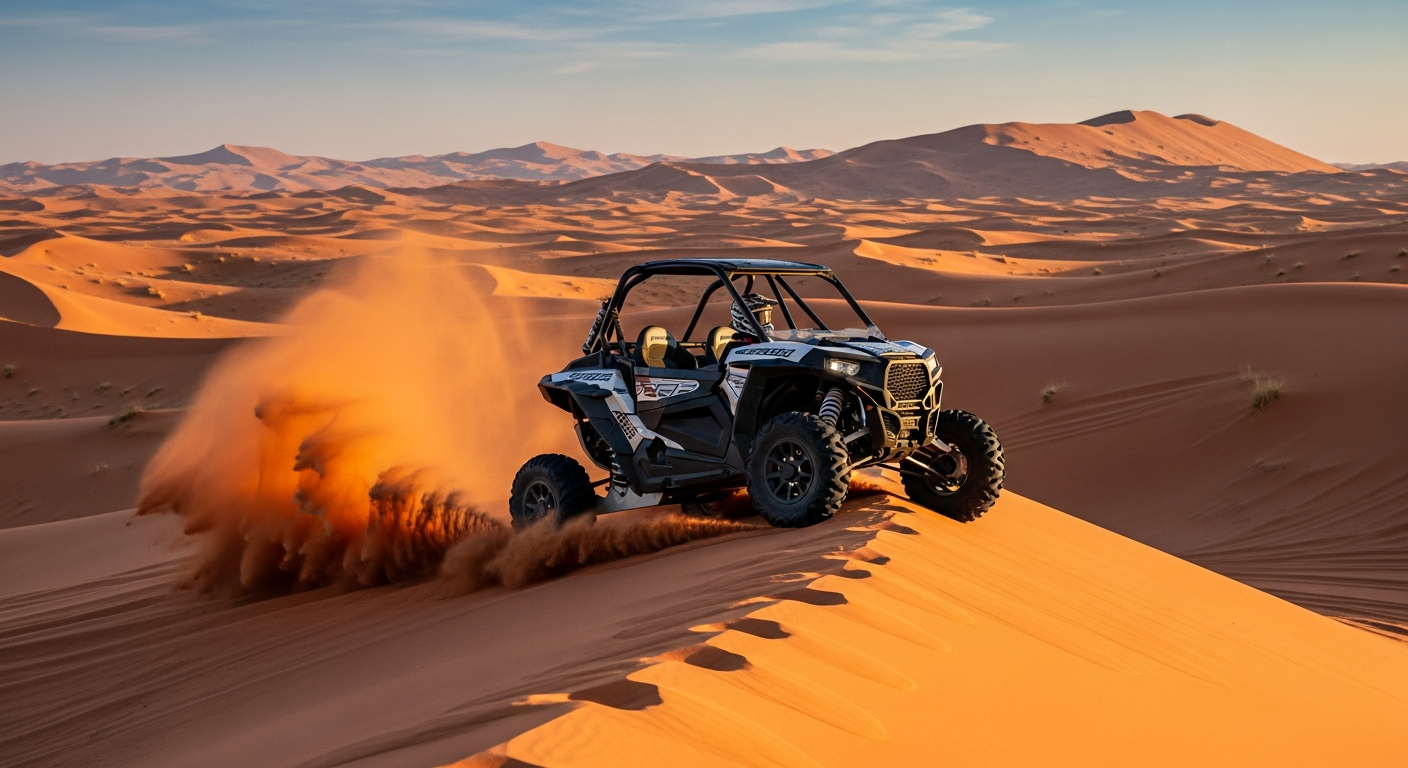
Storage is another small but useful detail. Loose items can bounce around during off-road driving, so it helps to know where phones, wallets and cameras can be kept. If there is no secure place, plan to travel light or use a closed bag that can be kept close and controlled.
When comparing options, keep the wording simple and specific. Ask what is part of the ride and what is optional, then check the same points with each provider. Pages such as alqudratours.com can be useful for getting a broad sense of how an option is presented, but the final decision should still rest on clear answers about the ride itself.
Ask about safety gear and fitting
Safety gear is not a minor extra on a dune buggy outing. A helmet should fit properly, sit level and stay steady when the head moves. A loose helmet can shift at exactly the wrong moment, while one that is too tight can become distracting over time.
Goggles matter too, because dust and blown sand can make it hard to see. Check whether eye protection is supplied and whether it works with glasses. Riders who wear prescription lenses should raise this before the day, as comfort and clear vision both affect control.
Seat belts, gloves and closed footwear also deserve attention. The exact requirements may vary, but anyone booking should understand what must be worn and what to bring. The practical rule is simple: if something is unclear before booking, ask rather than assume.
Review who can join and who can drive
Driver rules can affect the whole booking. Age limits, licence expectations and passenger requirements are not details to leave until arrival. Check whether each rider must drive, whether a passenger can share the vehicle, and whether there are restrictions for children.
Physical comfort is part of this too. off-road driving involves vibration, turning and sudden changes in surface. A person with back, neck or joint concerns may want to think carefully before choosing a rough route. That does not mean the activity is ruled out, but it does mean the ride level should match the person.
Group size can change the pace. A smaller group may allow more space between vehicles, while a larger one can feel busier and less flexible. Ask how drivers are briefed and how the pace is managed if riders have different experience levels.
Look into guiding and communication
A good briefing sets the tone. Before booking, check whether riders are shown how to steer, brake, accelerate and respond to hand signals. Clear communication is especially useful when the route includes other vehicles and changing sand conditions.

It is also reasonable to ask what happens if a rider wants to slow down or stop. The answer should not make someone feel pressured to keep up. A ride works best when the pace respects the least confident driver, not only the fastest one.
Language can matter here. If instructions are given in a language the group does not understand well, the day can feel less secure even when the route is manageable. Confirm how directions are explained and whether there is someone who can answer questions clearly.
Understand the safety picture
Bookers should check what safety planning is in place without expecting a promise that nothing can go wrong. Ask about first aid availability, communication between vehicles and the procedure if someone feels unwell or a vehicle stops. The aim is to see whether there is a calm, organised response to ordinary problems.
Insurance and liability wording can feel dull, yet it is worth reading. Look for what is covered, what is excluded and what behaviour may invalidate cover. If the wording is vague, request clarification before committing. A clear explanation is more useful than a broad claim that everything is taken care of.
Do not try to inspect, repair or adjust mechanical parts of a buggy yourself. If a vehicle seems wrong, that is a matter for trained staff. Riders can still pay attention to obvious signs such as a loose seat, uncomfortable harness or unclear controls and report them before setting off.
Plan for timing, heat and clothing
The desert changes through the day. Midday heat can be draining, while late afternoon light can be beautiful but cooler after sunset. Check the start time and consider how much waiting is involved before driving begins.
Lightweight, breathable clothing is usually more comfortable than heavy layers. Closed shoes are sensible because feet need protection around the vehicle and on rough ground. A hat and sun protection are useful for the periods before and after the ride, though they must not interfere with helmet fit.
Bring only what is needed. A small bag, sun protection and water are sensible, but loose accessories can become a nuisance during driving. Anything that might fly off or catch on controls should be left out of the vehicle.
Read the booking terms with care
Before confirming, check the date, start time, meeting point, included activities and cancellation terms. These details prevent avoidable confusion. If a plan includes other parts of a Dubai desert safari, make sure the driving segment is still clearly stated.
Ask whether the experience changes for weather, poor visibility or route closures. Flexible planning is normal in a desert setting. A provider that explains how adjustments are handled is easier to deal with than one that leaves the guest guessing.
It is also wise to check how questions are handled before the booking is made. If answers arrive quickly and clearly, that is a good sign. If basic points remain fuzzy, the day itself may feel disorganised. A short exchange before payment can save a lot of frustration later.
Final checks before confirming
By this stage, the choice should feel practical rather than impulsive. Confirm the rider level, vehicle type, safety gear, driver rules, guiding, timing and booking terms. Each point has a simple purpose: matching the experience to the people taking part.
A dune buggy ride dubai can be an exciting way to see the desert, but the best option is not always the one with the boldest description. Look for clear information, sensible limits and a route that fits the group. When those pieces line up, the booking is far more likely to lead to a smooth and enjoyable day.